Introduction
Experian, a global data and technology company, reports that financial institutions prevented over £130 million in identity fraud in Q1 2025. This trend highlights the importance of leveraging robust access control tools for enterprises to protect their digital assets.
Identity and Access Management (IAM) tools play a key role in reducing the risk of credential abuse. Among many tools, Okta is a crucial IAM platform that empowers IT security teams to implement digital security through modern access controls and efficient identity management.
Let’s see what Okta is and how it works.
Table of Contents
- What is Okta?
- Key Features of Okta
- How does it work?
- Use Cases of Okta
- Benefits of the Okta Platform
- Summary
- FAQs
- Conclusion
What is Okta?
Okta is a cloud-based identity and access management platform that IT security teams leverage to assess risks, enforce security policies, and secure devices before threats make a significant impact.

Okta automates risk detection and response mechanisms, eliminating mundane manual tasks. It centralizes identity, governance, and access controls, enabling teams to simplify IT security operations and eliminate silos.
Key Features of Okta
Okta offers a rich set of features to provide robust authentication and authorization solutions for organizations.
Let’s discuss them in the following.

- Single Sign-On (SSO)
This feature allows you to access resources quickly. It reduces password use and leverages phishing-resistant authentication flows to make access easier and safer.
Also, SSO helps to manage all identities from a single control plane, eliminating identity sprawl.
- Adaptive Multi-Factor Authentication (MFA)
You can use this Okta feature to protect resources against phishing attacks by leveraging the following methods.
- Okta FastPass, a phishing-resistant passwordless authenticator
- Smartcards, including Personal Identity Verification (PIV) and Common Access Cards (CAC)
You can restrict access to insecure and non-compliant devices using this feature.
- Device Access
This feature provides modern authentication for devices and apps, ensuring heightened security. It enables passwordless login and reduces the number of authentication prompts, simplifying security operations.
- Universal Directory
You can unify user, group, and device management in a single control plane using the Universal Directory. It supports syncing all identity sources spread across multiple locations, enabling holistic governance and simplifying workforce management.
- API Access Management
You can secure and manage API access by leveraging the Okta platform. Okta’s API or admin dashboard helps enforce API access control more efficiently using OAuth2.0 and JWT.
Moreover, you can onboard and integrate APIs quickly. Above all, Okta’s zero-trust architecture ensures API security against breaches.
To gain complete knowledge of OKTA Features, OKTA Training helps to a great extent.
How does Okta work?
In this section, let’s discuss how Okta streamlines access control operations and enhances organizations’ security posture.
- Authorization Workflow
Okta Workflows is a no-code automation tool. You can leverage the tool to automate business processes. Okta offers a library of integrated third-party apps and automated functions.
- Okta Workflows simplifies provisioning and deprovisioning of user accounts
- It can sequence actions with logic and timing. For example, it can create a non-activated account one week before a new employee joins a company. It activates the account on the first day of the employee’s joining.
- It sends notifications to lifecycle events such as app assignment or user suspension.
- Federated Identity
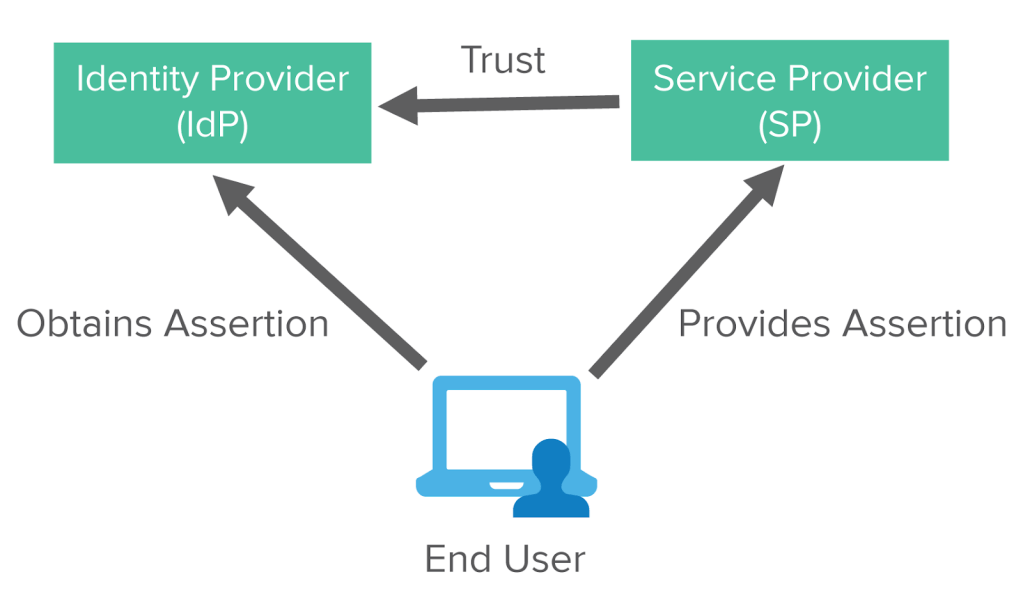
Federated identity is a method that allows users to link their identity across different identity management systems. It enables users to switch between the systems swiftly without compromising security.
There are two key players in federated identity: the identity provider (IdP) and the service provider (SP). Here, the IdP is the provider of users, and the service provider is the application that users log in to.
- Okta Integration Network (OIN)
The OIN offers over 8000 prebuilt integrations to help companies protect their resources from security threats. Below are some more crucial features of OIN.
- Okta’s secure identity integrations are a collection within the OIN. You use this feature in mission-critical applications because of its deep security capabilities. It helps meet compliance requirements and provides a rapid response to security threats.
- OIN integrates with applications that comply with modern security standards, including LCM, SSO, security posture visibility, remediation, and more.
- It allows users to securely sign in to your applications using their credentials and automate complex actions with low-code/no-code building tools.
Who Uses Okta?
- Okta states that thousands of organizations, including many Fortune 100 companies, use its identity security solutions.
- Major industries, including education, energy, finance, healthcare, manufacturing, and retail, use Okta to secure their IT resources.
- Leading companies such as MARS, JetBlue, FedEx, HPE, Hitachi, and McLaren leverage Okta to ensure cyber resilience.
Use Cases of Okta
Many companies adopt Okta for their identity and access management solutions. Let’s take a glance at some of them.
- Fine-grained authorization
Zapier, an automation company, leveraged Okta to implement an in-house authorization solution. The company sought to help customers protect their automation infrastructure through robust access controls.
Their IT security teams adopted Okta’s Auth0 FGA to enable centralized, flexible authorization. It allows teams to achieve fine-grained access control over coarse-grained access controls.
- Reduction in fixed IT costs
Hitachi, an electronics manufacturing company, downsized its on-premises authentication servers and migrated to the Okta platform. This approach helped the company reduce fixed IT costs while maintaining greater flexibility.
This adoption helped the company enhance agility by enabling quick incident response, given its frequent involvement in mergers and acquisitions.
- Simplified security audit processes
ManTech, a federal government contractor, employed Okta to centralize its identity management and streamline compliance.
This initiative led the company to simplify the process of sharing authorization and access details with its C3PAO(Certified Third-party Assessment Organization). The company could also showcase its security compliance with key controls.
Benefits of the Okta platform
By adopting the Okta platform, companies can:
- Increase the security of their IT infrastructure and decrease the attack surface
- Reduce the time and costs spent on automation, integration, and password resets
- Improve productivity with seamless remote access to resources
- Enhance both employee and customer experiences
- Accelerate onboarding and offboarding processes through automation
Summary
- Okta is a cloud-based identity and access management platform that helps companies secure their resources from unauthorized access and misuse.
- It supports SSO, so users can use a single set of credentials to access all applications.
- It uses a universal directory as a centralized repository for user data.
- It uses adaptive MFA to adjust authentication processes based on the user’s location, device, and behaviour.
- It offers the Okta Integration Network (OIN), with numerous prebuilt integrations that enable seamless connectivity to external services.
Conclusion
In short, Okta enables identity security by enabling user authentication, multi-factor authentication, a unified repository, and more. It offers an enhanced customer experience while still maintaining strong data security.
We hope this blog has provided you with the knowledge you need about the Okta platform and its capabilities.
At the end of the training, you will become a skilled Okta professional and gain the confidence to apply for IAM roles in top companies.
FAQs
- Is it easy to learn Okta?
Yes, you can learn Okta easily. Gaining some knowledge of identity and access management will help you quickly understand the Okta platform.
- How long will it take to learn Okta?
You can learn Okta Administration in 15 hours and Okta Developer in 20 hours through MindMajix’s Okta training. Industry experts deliver the training in live online and self-paced modes with intensive hands-on practices.
- Why should I learn Okta?
- According to Glassdoor, Okta IAM engineers can earn a salary from 4 LPA to 11 LPA in India. According to ZipRecruiter, Okta engineers can earn from $77,500 to $177,500 in the USA.
- The figures above show that Okta professionals can find career opportunities worldwide with good salaries.
 Data Science Duniya