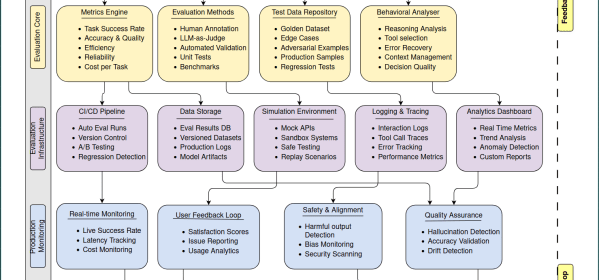
Learn how to evaluate AI agents in production with a complete framework covering metrics, evaluation methods, infrastructure, and continuous improvement strategies.
Learn Data Science, Machine Learning and Artificial Intelligence
Learn how to evaluate AI agents in production with a complete framework covering metrics, evaluation methods, infrastructure, and continuous improvement strategies.
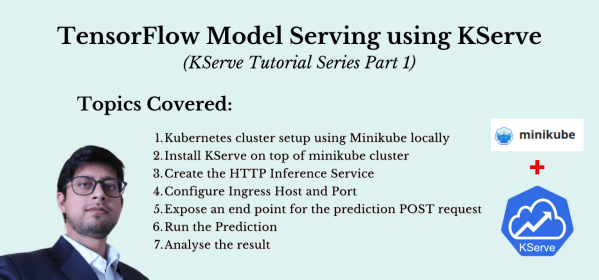
To setup KServe it is required to have a Kubernetes cluster setup. So we will be using Minikube for Kubernetes cluster setup locally. Minikube is a tool that allows you to run a single-node Kubernetes cluster on your local machine. It is designed to be a lightweight and easy-to-use solution for developers who want to experiment with Kubernetes, develop applications, or test deployments in a local environment without needing access to a full-scale Kubernetes cluster.
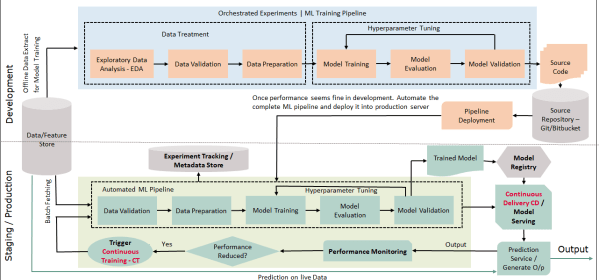
If you are a devops engineer and working in this role for more than three years then you can easily switch to highly paid mlops
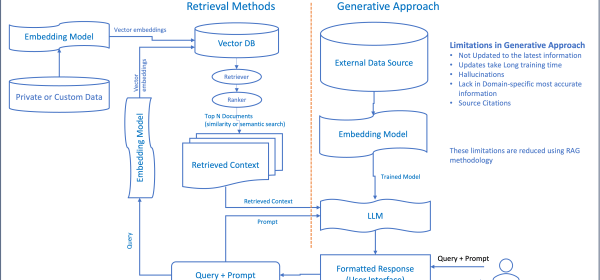
The RAG model is designed to enhance the capabilities of natural language processing models by combining elements of retrieval-based methods with generative approaches.
RAG is an AI framework that allows a generative AI model to access external information not included in its training data or model parameters to enhance its responses to prompts.

Experiment tracking is very important steps when it comes to model deployment in production. When we make model ready for deployment we compare the performances of different recorded experiments and check which one is the optimal one. That is where it becomes very much important to understand how to do experiment tracking for different models trained under different machine learning frameworks. In this post I am explaining step by step approach to do experiment tracking for TensorFlow Based image classification model.
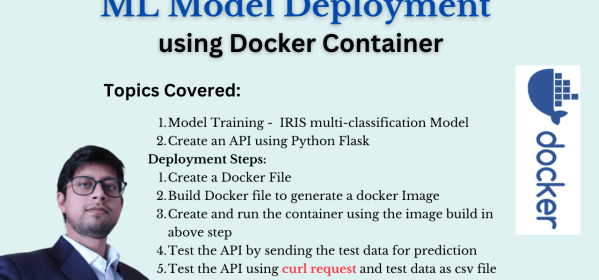
Model deployment is the next and very important steps once you finalized your model training and development. There are many methods available to deploy the models depending upon the type of serving. There are many serving methods like batch serving, online serving, real time serving or live streaming based serving. In this article I am going to explain one of the deployment mechanism which does online serving using APIs. So I will be explaining how to deploy models using Docker container and run them on production efficiently and reliably.
 Data Science Duniya